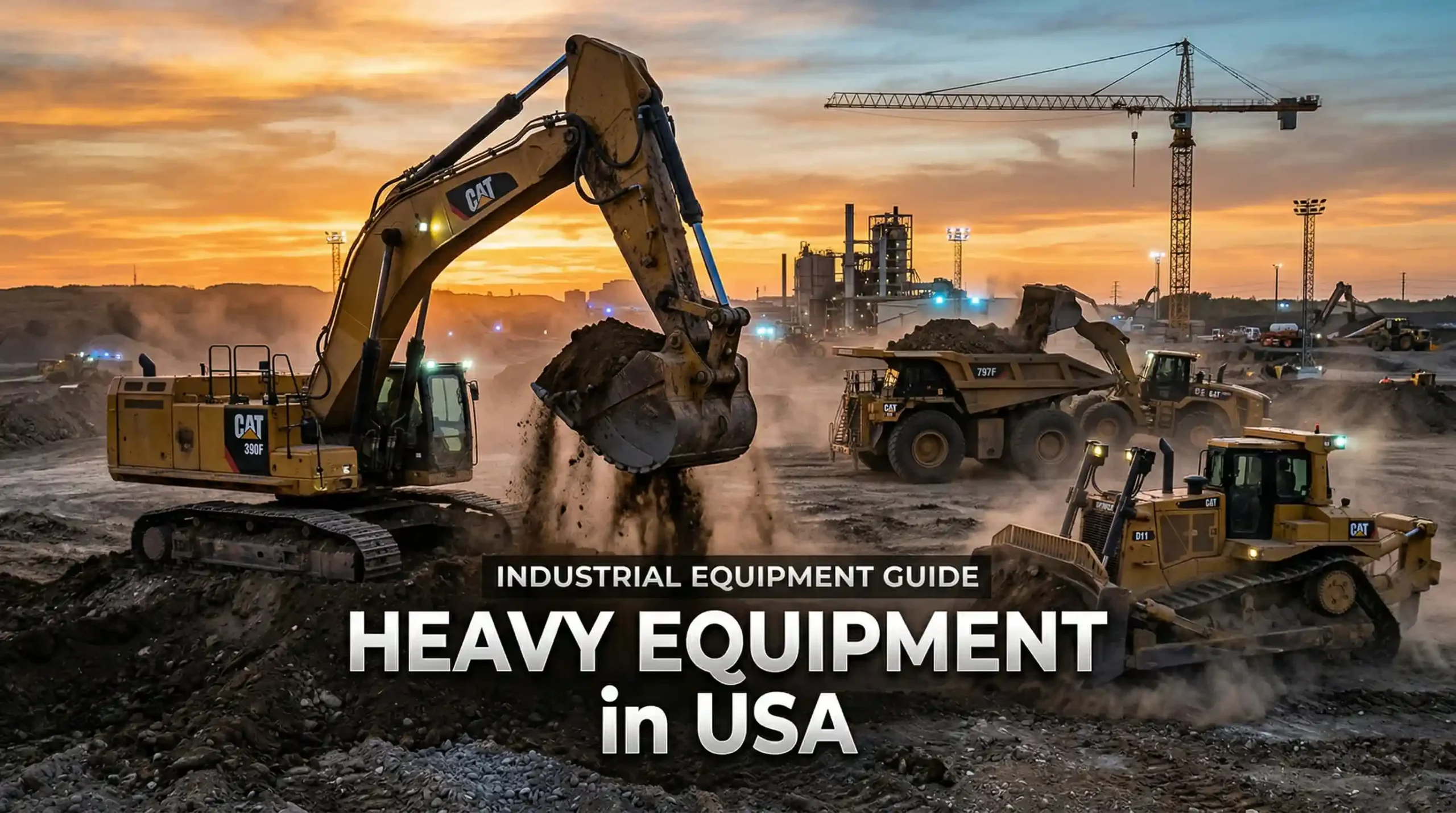
Heavy industrial equipment forms the backbone of large-scale infrastructure, construction, mining, and energy industries across the United States. These machines are designed to handle demanding tasks such as earthmoving, material handling, excavation, and heavy-duty production. In Tier-1 markets like the United States, Canada, the United Kingdom, and Australia, the demand for reliable and high-performance heavy equipment continues to grow as governments and private companies invest heavily in infrastructure development and industrial expansion.
Heavy industrial equipment includes a wide range of machines such as excavators, bulldozers, loaders, cranes, dump trucks, and drilling equipment. These machines are specifically built to operate in extreme conditions and deliver consistent performance over long periods. Industries such as construction, oil and gas, mining, and transportation rely heavily on this equipment to complete large-scale projects efficiently and safely.
One of the most recognized leaders in the heavy equipment industry is Caterpillar Inc., which is known globally for its durable construction and mining equipment. The company offers a wide range of machines, including excavators, wheel loaders, and bulldozers, designed for high productivity and long-term reliability. Another major player is Komatsu Ltd., a Japanese company with a strong presence in the United States. Komatsu is known for integrating advanced technology into its machines, including autonomous haulage systems used in mining operations.
John Deere is also a significant name in the heavy equipment market, particularly in construction and agricultural machinery. The company focuses on delivering machines that combine power, efficiency, and operator comfort. Volvo Construction Equipment is another global leader known for its innovative and environmentally friendly heavy machinery. Their equipment is widely used in construction and infrastructure projects across Tier-1 countries.
Excavators are among the most commonly used heavy industrial machines. These machines are essential for digging, trenching, and material handling. Modern excavators are equipped with advanced hydraulic systems and GPS technology, allowing operators to perform tasks with high precision. Bulldozers, on the other hand, are designed for pushing large quantities of soil, sand, and debris. They are commonly used in construction sites, mining operations, and land development projects.
Wheel loaders and skid steer loaders are widely used for material handling and loading tasks. These machines are highly versatile and can be equipped with different attachments such as buckets, forks, and grapples. Dump trucks are another critical component of heavy industrial operations, used for transporting materials such as soil, gravel, and construction debris. In mining operations, large haul trucks are used to move massive quantities of materials efficiently.
Cranes play a vital role in lifting and moving heavy objects in construction and industrial environments. Tower cranes are commonly seen in urban construction projects, while mobile cranes are used for flexible lifting operations. Companies such as Liebherr Group and Terex Corporation are known for producing high-quality cranes and lifting equipment used worldwide.
The cost of heavy industrial equipment in the United States can vary significantly depending on the type, size, and features of the machine. For example, a standard excavator can cost anywhere from $100,000 to $500,000, while large mining equipment and cranes can exceed $1 million. Businesses searching for heavy equipment price in the USA, construction equipment suppliers USA, or industrial machinery cost USA are typically looking for detailed comparisons and reliable suppliers before making a purchase decision.
In addition to purchase costs, companies must also consider operational expenses such as fuel, maintenance, and operator training. Heavy equipment requires regular servicing to ensure optimal performance and prevent costly breakdowns. Many companies also invest in telematics systems that provide real-time data on machine performance, fuel consumption, and maintenance needs. These systems help improve efficiency and reduce downtime, which is critical in large-scale operations.
Technology is playing an increasingly important role in the heavy industrial equipment sector. Modern machines are equipped with advanced features such as GPS tracking, automation, and remote monitoring. These technologies allow operators to perform tasks more accurately and safely while reducing the risk of human error. Automation is also becoming more common, particularly in mining operations where autonomous trucks and drilling systems are used to improve productivity.
Another important trend in the industry is the focus on sustainability and energy efficiency. Manufacturers are developing machines that consume less fuel and produce lower emissions to meet environmental regulations in Tier-1 countries. Electric and hybrid heavy equipment is also gaining popularity, especially in urban construction projects where noise and emissions are a concern.
For businesses looking to invest in heavy industrial equipment, choosing the right supplier is essential. Factors such as equipment reliability, after-sales support, availability of spare parts, and financing options should be carefully evaluated. Many companies prefer working with established manufacturers because they offer comprehensive support services and proven track records.
The demand for heavy industrial equipment is expected to remain strong in the coming years as infrastructure projects continue to expand across Tier-1 markets. Governments are investing in roads, bridges, railways, and energy projects, creating significant opportunities for construction and equipment companies. This growth is driving innovation in the industry and increasing competition among manufacturers.
In conclusion, heavy industrial equipment is a critical component of modern infrastructure and industrial development. With leading companies such as Caterpillar, Komatsu, John Deere, and Volvo Construction Equipment driving innovation, businesses have access to a wide range of advanced machines designed to meet their specific needs. By understanding the different types of equipment, their applications, and the factors involved in purchasing decisions, companies can make informed investments that support long-term growth and efficiency.