Introduction
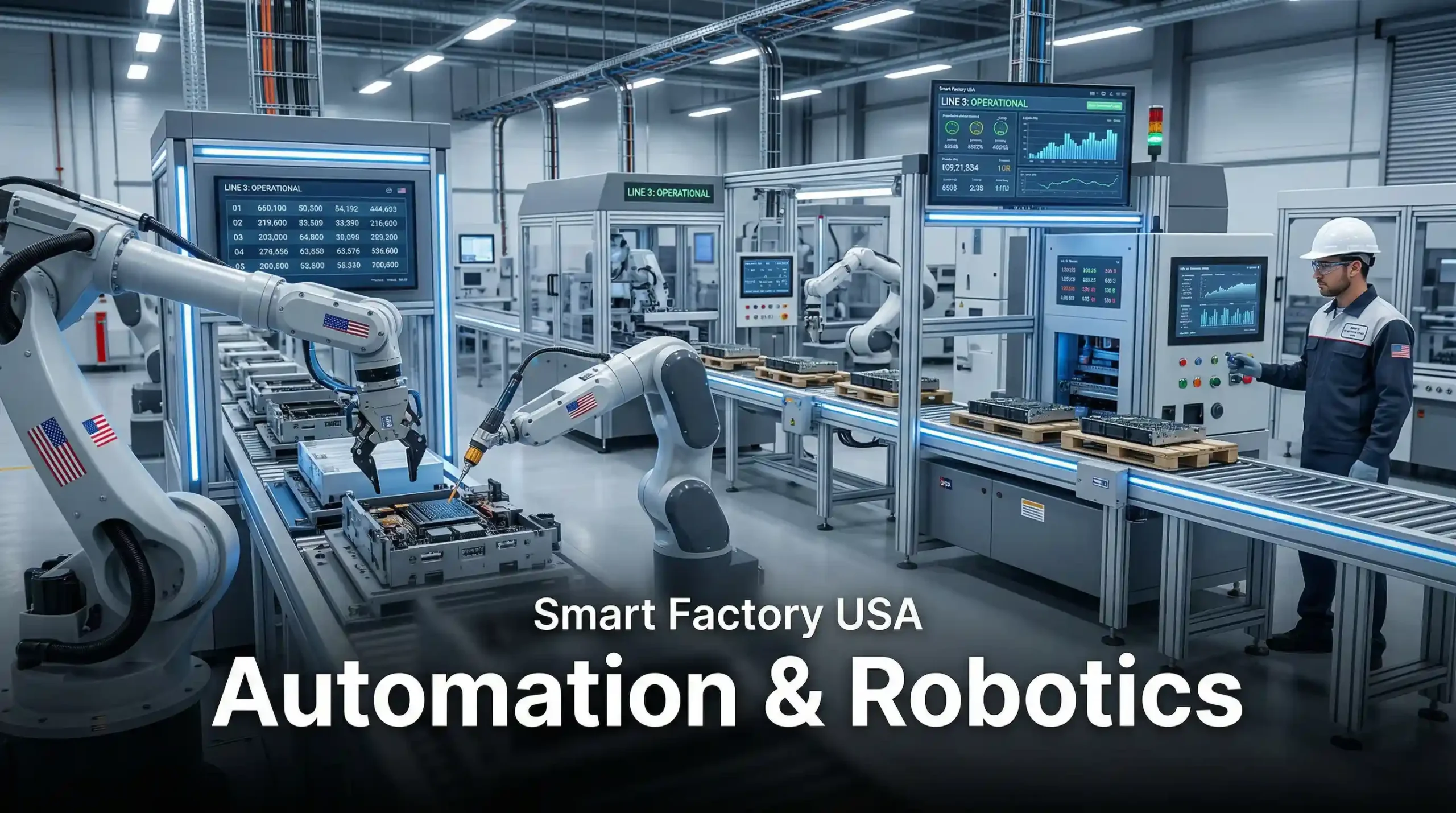
Industrial automation and robotics are transforming manufacturing and production systems across the United States. As industries move toward higher efficiency, precision, and scalability, automation technologies have become essential in modern factories. From automotive production lines to electronics manufacturing, robotic systems are now widely used to perform repetitive and complex tasks with accuracy and consistency.
In Tier-1 markets like the USA, companies are investing heavily in automation to reduce labor costs, improve productivity, and maintain global competitiveness. This shift toward smart manufacturing is driving rapid growth in the industrial automation sector.
Types of Industrial Automation Systems
Industrial automation includes a variety of systems and technologies designed to streamline operations. Programmable Logic Controllers (PLCs) are widely used to control machinery and processes in manufacturing environments. These systems allow operators to automate tasks and monitor performance in real time.
Human-Machine Interfaces (HMIs) are used to interact with machines and automation systems. They provide visual dashboards and controls that help operators manage operations efficiently.
Supervisory Control and Data Acquisition (SCADA) systems are used for monitoring and controlling large-scale industrial processes. These systems collect data from multiple sources and provide centralized control.
Robotic systems are another key component of automation. Industrial robots are used for tasks such as welding, assembly, painting, and material handling. These robots can operate continuously with high precision, making them ideal for high-volume production.
Types of Industrial Robots
There are several types of robots used in industrial automation. Articulated robots are commonly used for complex tasks such as welding and assembly. These robots have multiple joints, allowing them to move in different directions.
SCARA robots are designed for high-speed operations such as pick-and-place tasks. They are widely used in electronics manufacturing and packaging industries.
Delta robots are used for fast and precise operations, particularly in food processing and packaging. Collaborative robots, also known as cobots, are designed to work alongside humans, improving efficiency while maintaining safety.
Leading Automation and Robotics Companies
Several companies lead the industrial automation and robotics market in the United States. Rockwell Automation is a major player, providing automation solutions for manufacturing and industrial processes.
ABB Ltd. is known for its advanced robotic systems and automation technologies used across various industries. Fanuc Corporation is another leading manufacturer of industrial robots, widely used in automotive and electronics production.
Siemens AG offers comprehensive automation solutions, including digital factory systems and smart manufacturing technologies. These companies continue to drive innovation in automation and robotics.
Cost of Automation Systems in the USA
The cost of industrial automation systems varies depending on the complexity and scale of the implementation. Small automation setups can cost between $50,000 and $200,000, making them suitable for medium-sized businesses.
Large-scale automation systems with robotics, SCADA, and integrated software can cost several million dollars. Businesses searching for industrial automation cost USA, robotics system price, or factory automation solutions are typically evaluating long-term investments.
While the initial cost can be high, automation often leads to significant savings in labor and operational efficiency over time.
Benefits of Industrial Automation
Automation offers several benefits for businesses. One of the main advantages is increased productivity, as machines can operate continuously without fatigue. This leads to higher output and faster production cycles.
Automation also improves accuracy and consistency, reducing errors in manufacturing processes. Additionally, it enhances workplace safety by minimizing human involvement in hazardous tasks.
Another key benefit is scalability. Automated systems can handle increased production demands without requiring significant additional labor.
Technology Trends in Automation
Technology is driving rapid advancements in industrial automation. Artificial intelligence and machine learning are being integrated into automation systems to improve decision-making and efficiency.
IoT (Internet of Things) devices are used to connect machines and collect real-time data, enabling predictive maintenance and performance optimization. Digital twins and simulation technologies are also being used to design and test production systems before implementation.
Demand in Tier-1 Markets
The demand for industrial automation and robotics in the United States continues to grow as companies focus on efficiency and innovation. Industries such as automotive, electronics, and logistics are leading adopters of automation technologies.
Search trends show high interest in keywords such as industrial automation companies USA, robotics systems for manufacturing, and factory automation solutions. These keywords indicate strong commercial intent and high advertiser demand.
Conclusion
Industrial automation and robotics are reshaping the manufacturing landscape in the United States. With advanced systems and leading companies driving innovation, businesses have access to powerful tools that improve efficiency, accuracy, and scalability. As technology continues to evolve, automation will remain a key factor in maintaining competitiveness in modern industrial environments.