Introduction
Industrial electrical equipment plays a critical role in powering manufacturing plants, construction sites, data centers, and large-scale industrial operations across the United States. These systems ensure reliable power distribution, operational safety, and efficiency in environments where downtime can result in significant financial losses. As industries continue to expand in Tier-1 markets, the demand for advanced electrical infrastructure and energy management systems has increased rapidly.
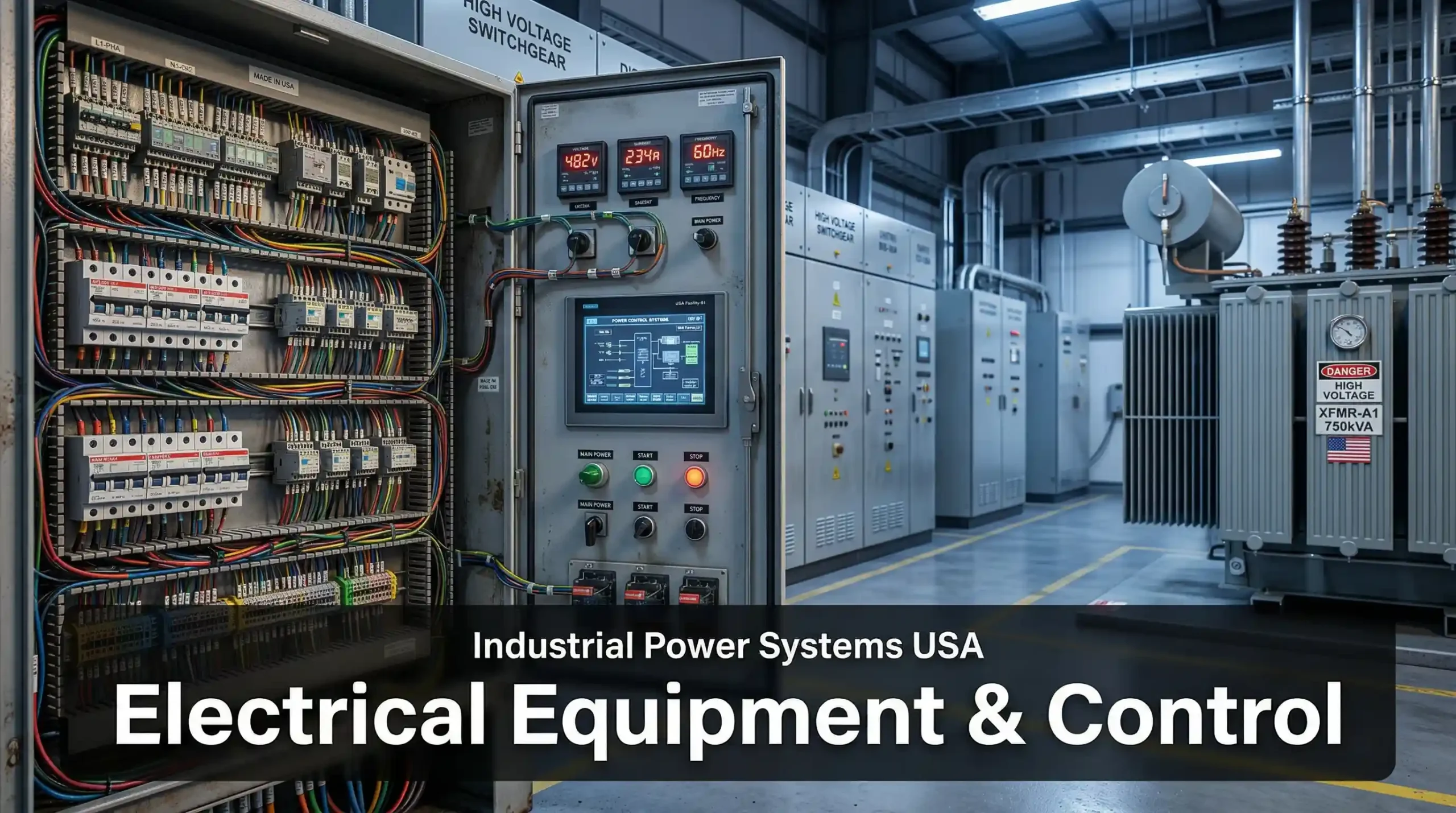
Industrial facilities rely on a combination of electrical components such as transformers, switchgear, circuit breakers, control panels, and power distribution systems. These components work together to deliver stable and controlled electricity to machines and processes, ensuring smooth and uninterrupted operations.
Types of Industrial Electrical Equipment
Industrial electrical systems consist of multiple components designed to manage and distribute power efficiently. Transformers are used to step up or step down voltage levels depending on the requirements of the facility. These are essential for maintaining safe and efficient power transmission.
Switchgear is another important component that controls, protects, and isolates electrical equipment. It helps prevent electrical faults and ensures the safety of both equipment and personnel. Circuit breakers are used to automatically interrupt power in case of overloads or short circuits, preventing damage and reducing the risk of fire.
Electrical control panels are widely used in industrial environments to manage machinery and automation systems. These panels contain controllers, relays, and other components that regulate operations. Industrial UPS (Uninterruptible Power Supply) systems are also critical, especially in data centers and sensitive manufacturing processes where power interruptions are not acceptable.
Leading Industrial Electrical Equipment Companies in the USA
Several companies lead the industrial electrical equipment market in the United States, offering advanced solutions for power management and automation. Eaton Corporation is a major player known for its energy-efficient electrical systems and power distribution solutions.
Schneider Electric provides a wide range of products including switchgear, automation systems, and smart energy solutions. The company focuses on sustainability and digital transformation in industrial environments.
ABB Ltd. is another global leader offering electrical equipment, robotics, and automation technologies. Their solutions are widely used in manufacturing, energy, and infrastructure projects.
Siemens AG also plays a significant role in industrial electrical systems, providing advanced control systems and digital solutions for smart factories.
These companies continue to innovate by integrating digital technologies, energy efficiency, and automation into their products.
Cost Factors of Industrial Electrical Equipment
The cost of industrial electrical equipment varies depending on the type, capacity, and complexity of the system. Small electrical components such as circuit breakers and control panels can cost a few thousand dollars, while larger systems such as transformers and switchgear can range from $50,000 to several hundred thousand dollars.
For large industrial facilities, the total cost of electrical infrastructure can reach millions of dollars. Businesses searching for industrial electrical equipment cost USA, power distribution systems price, or transformer cost USA are often looking for detailed comparisons and reliable suppliers.
In addition to equipment costs, installation, maintenance, and energy consumption are important factors to consider. Proper planning and design can help reduce long-term operational costs and improve efficiency.
Importance of Energy Efficiency
Energy efficiency has become a major focus in industrial electrical systems. Companies are investing in energy-efficient equipment to reduce electricity consumption and comply with environmental regulations. Efficient systems not only lower operational costs but also contribute to sustainability goals.
Smart energy management systems allow businesses to monitor and control energy usage in real time. This helps identify inefficiencies and optimize power consumption across different operations.
Role of Automation in Electrical Systems
Automation is transforming industrial electrical systems by integrating advanced technologies such as IoT (Internet of Things), sensors, and data analytics. Automated systems can detect faults, monitor performance, and adjust operations without human intervention.
These technologies improve reliability, reduce downtime, and enhance overall efficiency. In modern industrial environments, electrical systems are often integrated with automation platforms to create smart and connected operations.
Demand in Tier-1 Markets
The demand for industrial electrical equipment in the United States continues to grow due to increasing industrialization and infrastructure development. Industries such as manufacturing, energy, and data centers require reliable power systems to support their operations.
Search trends show high interest in keywords such as industrial power systems USA, electrical control panel manufacturers USA, and energy management systems USA. These keywords indicate strong commercial intent, making this niche highly valuable for content creators and publishers.
Conclusion
Industrial electrical equipment is a fundamental part of modern industrial operations in the United States. With a wide range of systems and components available, businesses can build reliable and efficient power infrastructure to support their needs. Leading companies such as Eaton, Schneider Electric, ABB, and Siemens continue to drive innovation in this field, offering advanced solutions that improve performance and sustainability. Understanding the different types of equipment, cost factors, and technological advancements can help businesses make informed decisions and ensure long-term success.