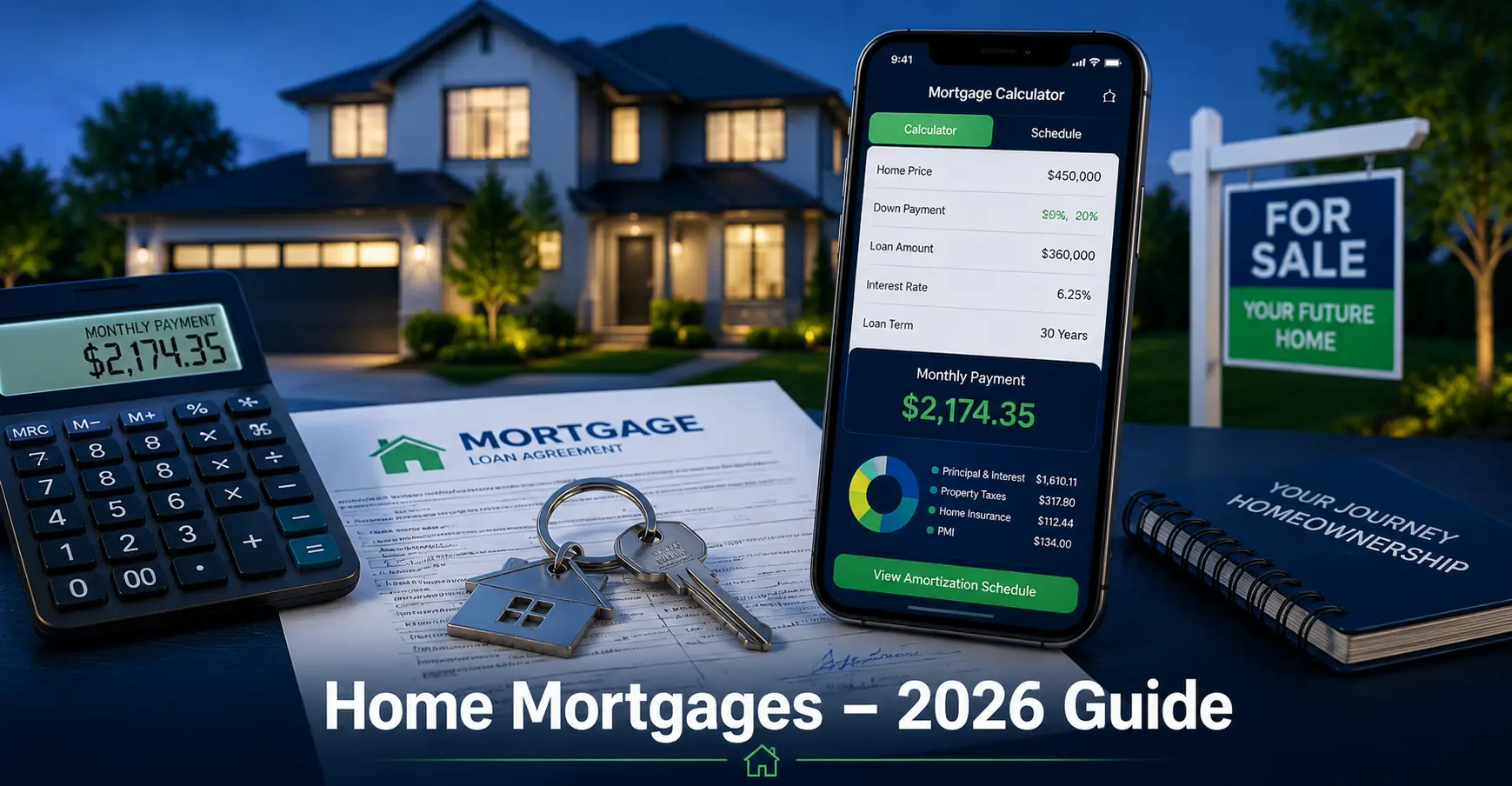
A home mortgage is one of the largest financial commitments that consumers make across leading developed economies. In the United States, United Kingdom, Canada, Germany, France, Japan, and Australia, millions of individuals and families use mortgages to purchase homes. Understanding how mortgages work, the different types available, and the current market conditions can help borrowers make informed decisions. This article provides a general overview of home mortgages across these mature markets. It is for informational and educational purposes only.
What Is a Home Mortgage
A home mortgage is a loan provided by a bank or lender to help a borrower purchase a property. The property itself serves as collateral for the loan. The borrower agrees to repay the loan over a fixed period with interest. Monthly mortgage payments typically include principal, interest, property taxes, and homeowners insurance. If the borrower fails to make payments, the lender has the right to foreclose on the property.
Common Types of Mortgages
Fixed rate mortgages have an interest rate that remains the same for the entire loan term. Monthly payments stay consistent, making budgeting easier. Fixed rate mortgages are popular among borrowers who plan to stay in their home for many years.
Adjustable rate mortgages have an interest rate that can change after an initial fixed period. The initial rate is often lower than fixed rate mortgages. After the fixed period ends, rates adjust periodically based on market conditions. These mortgages may be suitable for borrowers who plan to sell or refinance before the adjustment period begins.
Conventional mortgages are not backed by any government agency. They typically require higher credit scores and larger down payments but may offer competitive rates.
Government backed mortgages are insured by government agencies. In the United States, FHA loans and VA loans are common. In Canada, CMHC insured mortgages are available. These mortgages often allow lower down payments and have more flexible credit requirements.
Jumbo mortgages exceed the conforming loan limits set by government sponsored enterprises. These mortgages typically have higher interest rates and stricter qualification requirements.
Interest only mortgages allow borrowers to pay only interest for a specified period. After that period ends, payments increase to include principal. These are less common and carry higher risk.
Current Mortgage Rates and Trends in 2026
Mortgage rates vary across developed economies based on central bank policies, inflation, and local market conditions. Rates are influenced by the economic health of each country. Borrowers in markets with strong competition among lenders may find more favorable rates. Generally, longer loan terms carry higher interest rates while shorter terms offer lower rates. Fixed rate mortgages typically have slightly higher rates than adjustable rate mortgages at the time of origination.
Key Factors That Affect Mortgage Qualification
Credit score is one of the most important factors in mortgage approval. Higher credit scores qualify for lower interest rates and better terms. Most conventional mortgages require credit scores of 620 or higher in the United States. Government backed mortgages may accept lower scores.
Down payment is the amount paid upfront toward the home purchase. Larger down payments reduce the loan amount and may eliminate the need for mortgage insurance. Conventional mortgages often require 5 to 20 percent down. Government backed mortgages may allow as little as 3 to 5 percent down.
Debt to income ratio compares monthly debt payments to gross monthly income. Lenders prefer ratios below 43 percent. Lower ratios increase approval chances and may qualify for better rates.
Employment and income history shows lenders that the borrower has stable income to make monthly payments. Most lenders require two years of consistent employment history.
Loan term affects monthly payments and total interest paid. Common terms are 15 years and 30 years. Shorter terms have higher monthly payments but much lower total interest costs.
Mortgage Insurance Requirements
Mortgage insurance protects the lender if the borrower defaults on the loan. Private mortgage insurance is typically required when the down payment is less than 20 percent of the home price. Government backed mortgages have their own insurance programs like MIP for FHA loans. Mortgage insurance increases monthly payments and is an important cost to consider when calculating affordability.
Mortgage Application Process
Pre approval is the first step for most home buyers. The lender reviews credit, income, and assets to determine how much the borrower qualifies for. Pre approval letters help buyers make competitive offers on homes.
Pre qualification is a simpler process that provides an estimate of how much the borrower may qualify for without a full credit review.
Formal application occurs after the buyer finds a home and makes an accepted offer. The borrower submits detailed financial documentation including tax returns, pay stubs, bank statements, and identification.
Underwriting is the process where the lender verifies all information and assesses risk. The underwriter may request additional documentation during this stage.
Closing is the final step where loan documents are signed and funds are transferred. The borrower pays closing costs which typically range from 2 to 5 percent of the loan amount.
Mortgage Refinancing Options
Refinancing replaces an existing mortgage with a new one. Borrowers refinance to secure lower interest rates, change loan terms, or access home equity. Rate and term refinancing changes the interest rate or loan term without taking cash out. Cash out refinancing allows borrowers to borrow more than the existing loan balance and receive the difference in cash. Refinancing involves closing costs similar to a purchase mortgage. Borrowers should calculate whether the savings from a lower rate will outweigh the costs of refinancing.
Rising Interest Rate Environment in 2026
Many developed economies are experiencing a rising interest rate environment in 2026. Central banks have increased policy rates to control inflation. This affects mortgage rates directly. Borrowers considering adjustable rate mortgages should understand that rates may increase significantly when the fixed period ends. Fixed rate mortgages provide protection against future rate increases but come with higher initial rates.
Common Mistakes to Avoid When Getting a Mortgage
Making large purchases before closing can change debt to income ratios and jeopardize loan approval. Opening new credit accounts can lower credit scores. Changing jobs during the application process may complicate income verification. Not comparing multiple lenders can result in paying higher rates and fees. Ignoring closing costs can lead to unexpected expenses at the final stage.
Final Thoughts
A mortgage is a significant financial commitment that requires careful consideration. Borrowers in developed economies have access to various mortgage types including fixed rate, adjustable rate, and government backed options. Comparing offers from multiple lenders and understanding all costs involved can lead to better outcomes. Working with a qualified mortgage professional can also help navigate the application process.
Disclaimer : This article is for informational and educational purposes only and does not constitute financial, legal, or professional advice. Mortgage rates, terms, and qualification requirements change frequently. The information presented may not reflect the most current offerings. Readers should verify all details directly with lenders and consult with a qualified financial advisor or mortgage professional before making any real estate decisions.