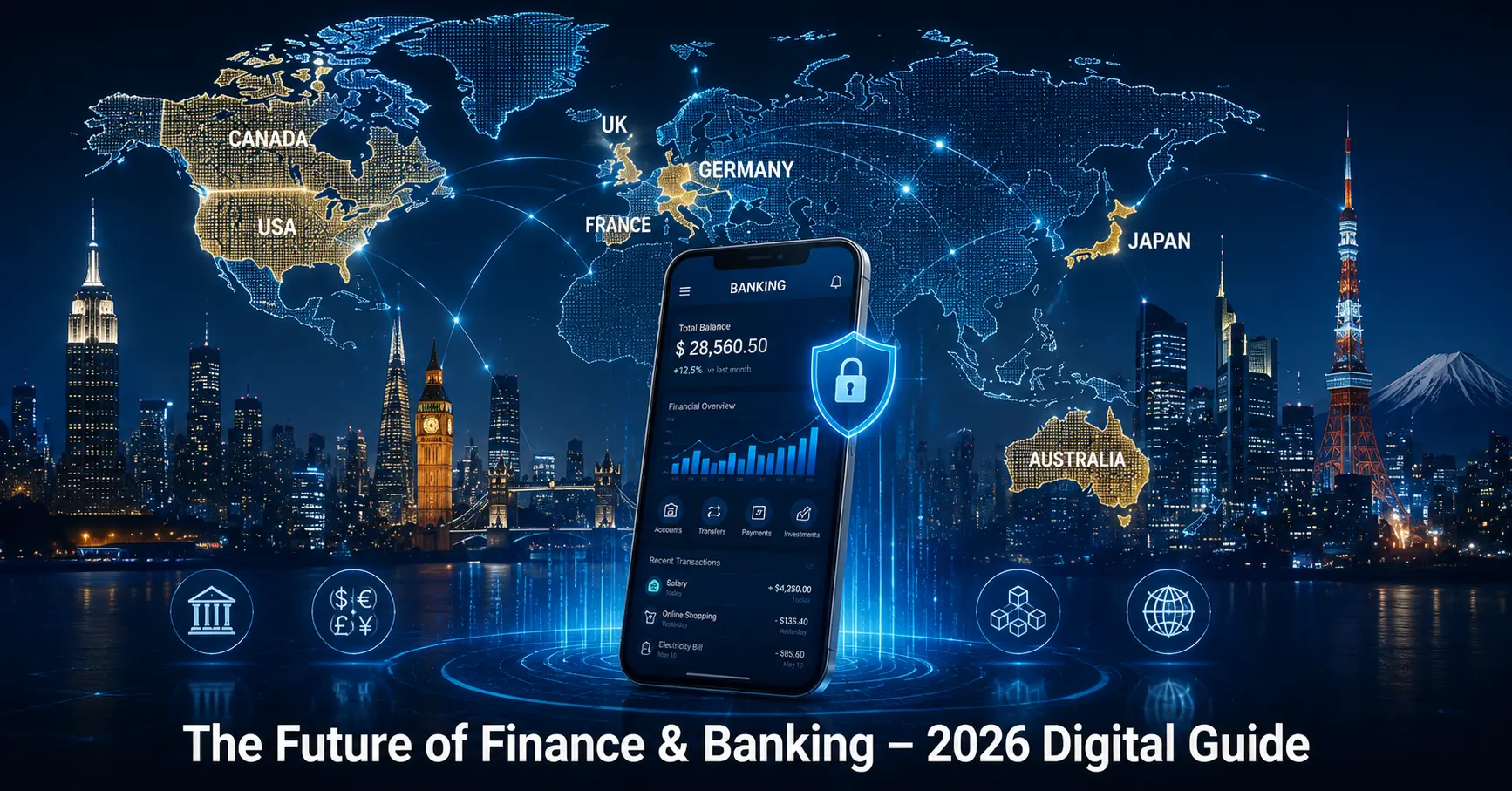
The finance and banking sector in the world’s leading developed economies is changing faster than ever before. In 2026, digital banking, artificial intelligence, and open banking systems have become the new normal. Consumers in these advanced economies now expect instant payments, low fees, and complete transparency from their financial institutions. Major banking hubs including New York, London, Toronto, Frankfurt, Paris, Tokyo, and Sydney are setting global standards for innovation and regulation. This article provides a general overview of current trends, regulations, and services available across these mature banking markets. It is for educational and informational purposes only.
Open Banking and Data Sharing Reforms
Open banking allows customers to share their financial data securely with third-party providers. In the United Kingdom and European Union, open banking has been mandatory for major banks since 2018 under PSD2 regulations. Canada implemented its Consumer-Driven Banking Framework in 2025. Australia has fully rolled out the Consumer Data Right for banking. Japan is currently finalizing its open API standards. These reforms have led to the growth of budgeting apps, loan comparison tools, and automated savings platforms. Customers in these advanced economies now benefit from more competitive interest rates and personalized financial products.
Artificial Intelligence in Banking Operations
Artificial intelligence is now widely used by major banks for customer service, fraud detection, and credit scoring. Chatbots powered by generative AI handle routine inquiries 24 hours a day. Machine learning models analyze transaction patterns to flag suspicious activity in real time. In Germany and France, AI helps banks assess mortgage applications within minutes instead of weeks. In Japan and the United States, AI-based robo-advisors offer low-cost portfolio management. However, all AI decisions are regularly audited by human compliance teams to ensure fairness and regulatory compliance.
Instant Cross-Border Payment Systems
Traditional international wire transfers often took three to five business days to settle between developed economies. In 2026, real-time payment systems have changed this completely. The United States operates FedNow, which connects with the United Kingdom’s Faster Payments, Europe’s TARGET Instant Payment Settlement, Canada’s Real-Time Rail, and Australia’s New Payments Platform. Japan’s Zengin System also now supports 24/7 instant settlements. These systems reduce transfer times to under ten seconds. They also lower transaction costs significantly for consumers and small businesses operating across these major financial markets.
Cybersecurity and Fraud Prevention Measures
As digital banking grows, so do cybersecurity threats. Regulators in these leading economies now require multi-factor authentication for all online banking transactions. Biometric verification using fingerprints or facial recognition has become standard on mobile banking apps. Banks in Germany, France, and the United Kingdom conduct mandatory monthly penetration testing. In the United States and Canada, the Federal Trade Commission and Financial Consumer Agency respectively enforce strict data breach notification rules. Customers are encouraged to use unique passwords and enable transaction alerts on all accounts.
Sustainable Finance and Green Banking Products
Environmental concerns are reshaping banking across major financial centers. Many banks now offer green mortgages with lower interest rates for energy-efficient homes. Canadian banks including RBC and TD have launched eco-friendly savings accounts where deposited funds are used only for renewable energy projects. French banks like BNP Paribas have published detailed transition plans away from fossil fuel financing. Japanese banks issue transition bonds to help manufacturing industries reduce carbon emissions. Australian banks partner with government agencies to fund solar and battery storage installations. These products give consumers the option to align their banking with personal environmental values.
Regulatory Environment for Consumer Protection
Leading developed economies maintain strong consumer protection regulations in finance and banking. The United States has the Consumer Financial Protection Bureau. The United Kingdom has the Financial Conduct Authority. Germany and France follow European Banking Authority guidelines. Canada has the Financial Consumer Agency. Japan operates under the Financial Instruments and Exchange Act. Australia uses the Australian Securities and Investments Commission. These regulators ensure that banks disclose all fees, maintain adequate capital reserves, and treat customers fairly. Deposit insurance schemes in each country protect individual accounts up to certain limits.
Important Considerations for Banking Customers
Consumers in these advanced economies should regularly review their bank statements for unauthorized transactions. They should compare interest rates across at least three different financial institutions before opening savings accounts or applying for loans. Using two or three separate banking providers can reduce risk and increase access to different features. Customers should also verify that their bank displays official regulatory logos on its website and mobile app. Reading the terms and conditions for any new financial product remains essential, even when the product appears simple.
Conclusion
The finance and banking industry across leading developed economies continues to evolve toward faster, safer, and more transparent services. Open banking, artificial intelligence, instant payments, and sustainable finance are now mainstream features. Consumers who stay informed about their rights and available options can benefit from lower costs and better protection. However, every individual’s financial situation is unique. Therefore, personal research and consultation with qualified professionals remain important before making any significant financial decision.
Disclaimer : This article is for informational and educational purposes only and does not constitute financial, legal, or professional advice. Financial situations vary by individual and jurisdiction. Nothing herein guarantees future performance or results. Always conduct your own research and consult a licensed professional before making financial decisions.